CTMPR

Concise Training For A More Profitable Retirement!

Investing In Silver – A Beginners Guide

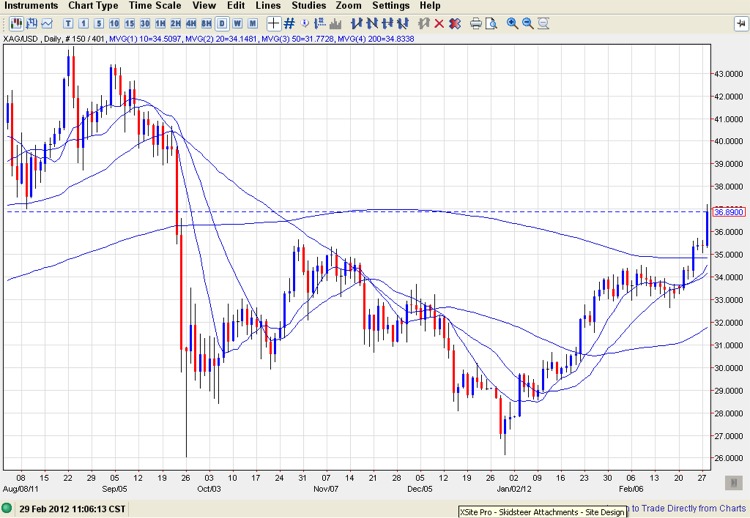
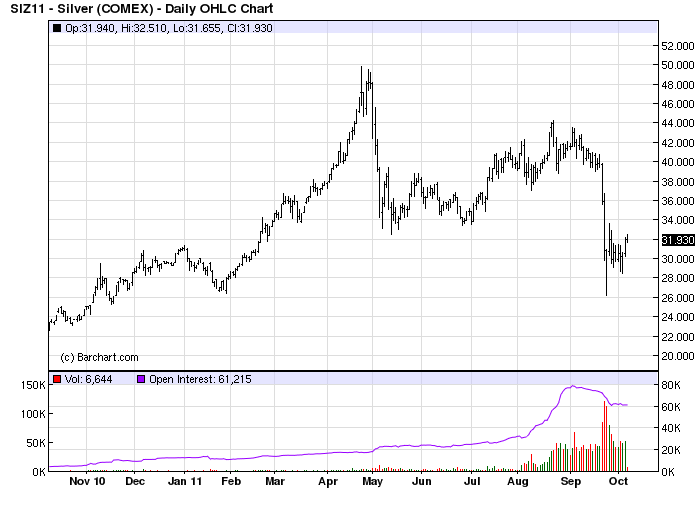
Silver had one of the most spectacular runs from September 2010 to April 2011 in the history of commodity markets. When silver gains momentum there are few other markets that can perform in such a spectacular fashion. Even after the spectacular run it had in 2011 there are many silver bulls out there who believe we are ultimately headed for $100+. If you want to participate in the silver market there are several different ways to do it.

#1 – Silver Futures (Comex & Mini)

This was my first introduction to silver back in 1988 when silver had a nice rally following the 1988 drought. At the time I bought an option on Comex Silver Futures and went on a wild ride. Back then however a $3 or 4 move was pretty substantial and didn’t happen on a weekly basis like it does today. The two different futures contracts that are available are the 5000 ounce Comex Silver contract that trades on the CME and the 1000 ounce E-Mini contract that trades on NYSE/Liffe. Both are viable trading vehicles with plenty of liquidity.

#2 – Silver Coins

This was the second way I purchased silver in 1989, unfortunately I bought too high in the quality structure (MS 65-66) and paid way too much. If you are buying simply for the value of the actual silver I would buy junk silver (pre-1965 coins) that contain roughly 90% silver. The other way to go is to purchase silver bars that come in a variety of sizes. Check prices at reputable online dealers before you venture out to local dealers, that way you will know the spreads ahead of time. There are lots of great dealers but plenty of crooks as well.

#3 – Silver ETFs

The explosion in popularity of SLV – the largest silver etf as well as the Physical Silver ETF (SIVR) and the Sprott Physical Closed End Fund had a lot to do with the sharp run up in silver. In the weeks leading up to the top I had heard from several different sources of people who were putting large chunks of their retirement accounts into the SLV. These ETFs generally move penny for penny with the price of silver so they are very volatile compared to the stock market. If you crave even more volatility, ProShares offers the Double Silver ETF (AGQ) as well as a Double Short Silver ETF (ZSL). Be careful with these as they are designed to be trading tools and not held as long term investments.

#4 – Silver Mining Stocks

My favorite silver mining stock is Silver Wheaton – SLW because they are not actually a mining company. They buy silver from other mining companies that produce it as a by product of copper mining etc. They typically pay low prices ($4-5) on a long term contract, so they have tremendous leverage as the price of silver rises. Since they have no mining risks or production cost risk it tends to eliminate some of the company specific problems that can plague mining stocks. The other way I like to play silver mining stocks is by using SIL which is a silver mining etf that is made up of all the major global silver mining companies. Mining companies tend to be leveraged to the price of silver so they can outperform when prices are rising but tend to under perform when prices are falling.

As you can see there are many different ways to purchase silver and it basically comes down to why you want to own it. If you are planning for the end of the monetary system, then it’s best to own the actual physical silver. If you are buying it to profit from a price rise, I prefer the mini futures contract as you can hold 1000 ounces for just a few thousand dollars. Just don’t over extend yourself, that’s the quickest way to get in trouble in the silver market. It’s definitely not a place for the faint of heart!

Investing In Gold – 4 Different Ways!

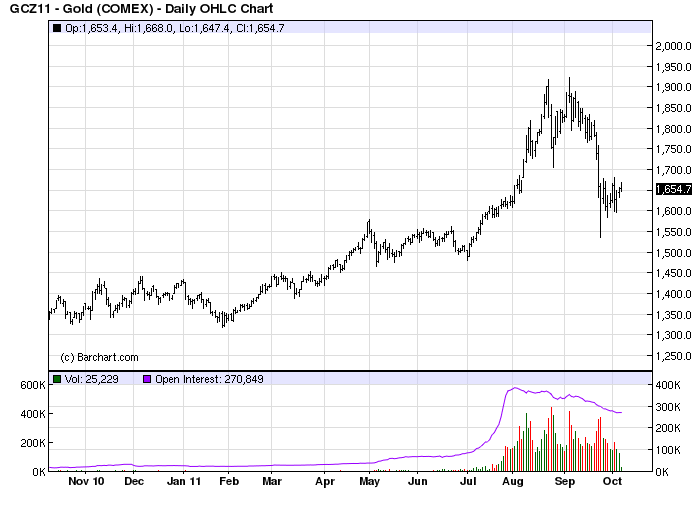
Gold has been one of the hottest investments of the last 6 months taking the place of silver which was the hot one the previous 6 month period. Due to the outstanding performance many investors are looking for ways to gain exposure to rising gold prices. There are several ways to invest in gold and I will briefly go over each one.

#1 – Buy Physical Gold in the form of coins or bars.

The Krugerrand and the American Gold Eagle are the two most popular 1oz coins and both trade for about a 10% premium over the price of gold. They both have very liquid markets making them easy to buy and sell which is important.

There are also gold bars available which range from 1 gram to 400 Troy ounces. Just for reference the U.S. gold price is typically quoted in Troy Ounces and there are approximately 31.1 grams in a troy ounce. This makes it easier to compare prices for different sized gold bars.

The benefit of physical gold is that you have actual physical possession of your gold in case there is ever a complete collapse of the international monetary system. The down side is that you have to have a secure place to keep your gold so it isn’t stolen, commercial storage is an option but then you incur additional costs.

#2 – Buy Gold Futures

Gold Futures were the first way I ever bought gold back in 1987 and continue to be my preferred way to make large purchases of gold. The fact that I can hold 100 oz of gold for a few thousand dollars (currently $185,000 worth of gold for $5500) is very appealing and allows me to really capitalize on the trend without tying up all my capital. The down side is that same leverage, with gold moving $20-60 per day you have to be able to handle swings in your account of $2-6000 per day. There is also a mini-gold contract which I frequently trade that is 1/3 the size of the Comex Gold Contract. This contract has become very active in the past few years so is a very good way to go.

#3 – Gold ETFs or ETNs

The Gold ETF has become very popular over the past several years since GLD began trading in 2004. In fact, GLD has become the second largest ETF based on Assets Under Management behind only SPY which is the S&P 500 ETF which basically started the whole industry. The Gold ETFs are backed by physical gold which is stored on behalf of the trust holders. There has been some concern as to whether there is enough gold in storage to completely back up all of the outstanding ETF shares. Those who have an issue with these types of allegations should stick with physical gold (coins or bars). Since GLD is currently trading at roughly $186 per share (1/10th ounce of gold) some individual investors might be more interested in IAU from iShares which trades at $18.60 for (1/100th ounce of gold) as it makes round lot share purchases much more affordable.

There are also Leveraged Gold ETF and ETN options available for not only playing the upside but also capturing the downside of the gold market. UGL (2X long ETF) and DGP (2X Long ETN) both seek to replicate 200% of the daily price move in cash gold prices. The leveraged short gold etf – GLL (2x Inverse ETF) and DZZ (2x Inverse ETN) seek to provide 200% inverse correlation to the daily price movement of cash gold. In other words if gold fell 1% on a given day the goal of these funds is to rise 2%.

#4 – Purchasing Gold Stocks or Gold Stock ETFs

Gold stocks have long been a favorite way for investors to participate in bull moves in the gold and silver markets. Gold miners tend to be leveraged to the price of gold so in theory they can go up and down much more on a percentage basis than the actual price of the metal.

I tend to use the Gold Mining ETF (GDX) instead of choosing an individual company as past history has shown it’s difficult to pick the right one. Also, mining companies tend to be volatile along with mine results so company specific risk is a definite hazard.

If you crave even more volatility you can go with the junior miners which tend to be in the development stages and offer additional volatility. In this case I would definitely stick with the Junior Mining ETF (GDXJ) instead of trying to choose individual winners. Junior mining companies are capable of dropping 50% or more with very little warning so they tend to be horrible investments for the average investor.

For those who want to trade a Leveraged version of the gold stocks Direxion now offers a Triple Leveraged (3X Long) Gold Stock ETF trading under the ticker symbol NUGT and a 3X Short version – DUST for those who want extreme volatility. These are designed to be trading vehicles and are definitely not designed for buy and hold investors.

There you have it. These are the 4 basic ways that individual investors can go about investing in gold. Each way has it’s pros and cons so you simply have to decide which is right for your situation!

S&P 500 Held Support – Then Failed

The good news is that the S&P 500 managed to close out the month of August above support at 1202 ($119.62 for the SPY S&P 500 ETF). The bad news is that the first two days of September have seen the market slice back through that support level. The charts at this point look bad and the daily chart looks like the market will at least go back and test the August lows.

At this point I’m keeping lots of cash on hand until we see how this plays out. Looking at the German DAX it’s very possible that Europe is going to continue to drag us lower. Our financials are once again taking a beating and it seems there is no catalyst in sight that could turn them around.

When everyone comes back after Labor Day it’s going to be interesting to see if they are ready to buy or if they will continue to take off risk. If they take a look at the charts on Tuesday morning, they won’t like what they see.

For now it’s just to wait for more market direction. Many people are talking about a retest of the August lows as being the ultimate downside risk but unless we can stop penetrating the 1200 level on the downside, this market is on life support.